


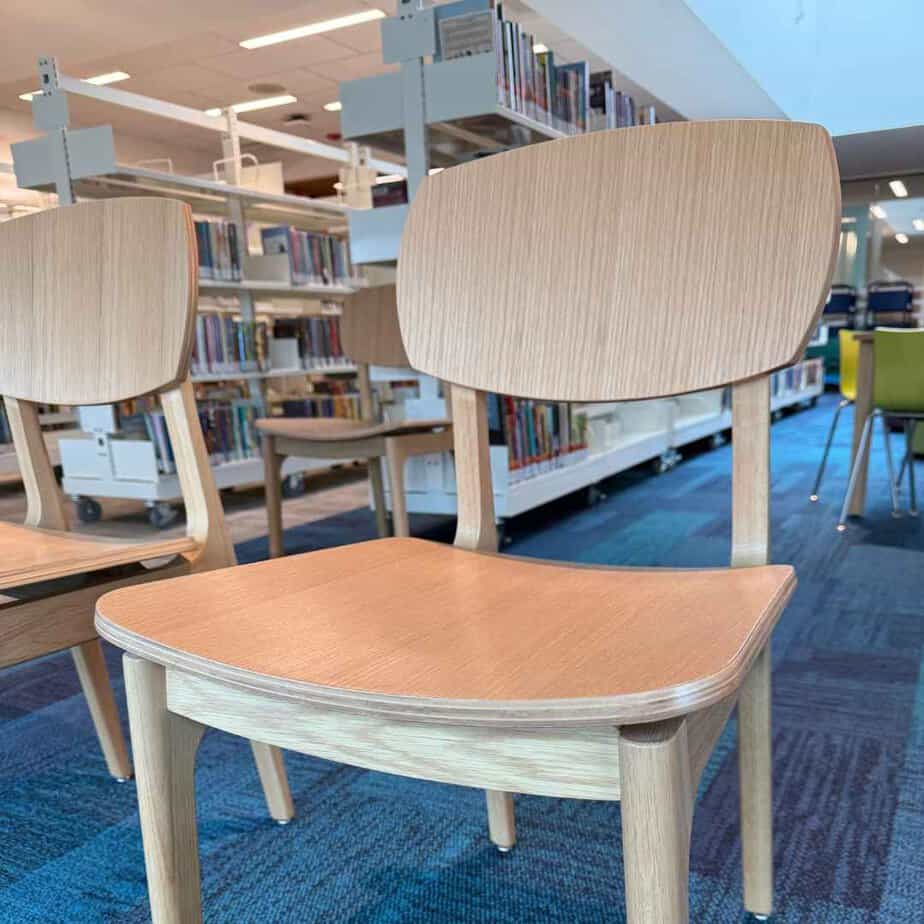
The best library seating plan starts with how people actually use each space. A quiet reading room, collaborative study area, computer space, meeting room, and event space may all require different chairs. Rather than specifying one chair throughout the building, libraries can select seating based on comfort, mobility, table compatibility, durability, and flexibility while using hardwood, finish, upholstery, and design details to create a cohesive look.
Libraries have changed significantly, but one thing has not: people still spend a lot of time sitting in them. What has changed is what they are doing while they sit.
A patron may spend several hours reading or working independently. Students may gather around a table for a group project. Tutors meet with students. Visitors use computers. Community groups attend meetings. Libraries host lectures, workshops, performances, and special events. That means the question is no longer simply, “What is a good library chair?” A better question is, “What does this chair need to do in this particular part of the library?”
How is each space in the library used?
Before choosing a chair, identify the primary activities that take place in each area. Consider how long people typically remain seated and whether chairs will stay at tables or move frequently. Think about whether patrons work independently or collaboratively, use laptops or other devices, or attend lectures and events.
It is also important to determine whether the furniture needs to be moved for programming, whether chairs need to stack, and whether new seating must fit existing tables. The architectural significance of the space and the need to accommodate multiple activities in the same room should also influence the selection.
The answers may lead to several different seating solutions within one building.
Reading Rooms Need Chairs Designed for Longer Sitting
A traditional reading room has different requirements from a multipurpose event room. Patrons may sit for extended periods while reading, researching, studying, or working on a laptop. Comfort therefore becomes especially important. Seat height, seat depth, back support, and overall proportions should be considered alongside the height and design of the reading tables.
The chair also needs to hold up to frequent daily use.In an academic library, a reading-room chair may be occupied by many different students over the course of a single day. Public library seating may serve patrons of widely varying ages and body types. A sample chair can be valuable before a large order because it allows the project team to evaluate comfort with the actual tables.
Collaborative Spaces Need Seating That Can Move
Group study spaces function differently. Students and patrons may pull chairs from one table to another, turn them toward one another, or reorganize seating as groups change size. That means chairs in collaborative areas need to tolerate frequent movement.
Chairs should be easy to reposition, durable enough for frequent movement, and appropriately sized for the tables. They should allow several people to gather comfortably without overcrowding the space and remain stable as users turn or shift position.
The most appropriate chair for a formal reading room may not be the best chair for a collaborative study area.
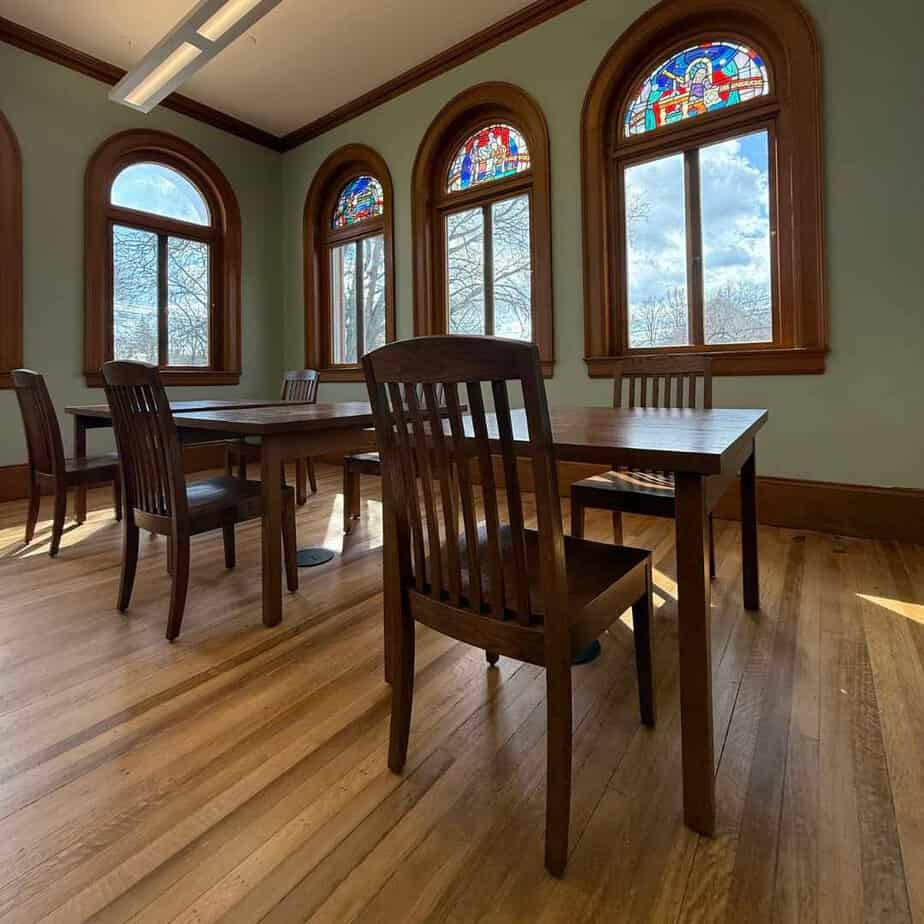 Multipurpose Rooms Benefit From Stackable Seating
Many libraries now include rooms that serve several purposes. A room may host a lecture in the morning, a community meeting in the afternoon, and a workshop in the evening. Fixed seating arrangements can make those transitions difficult. Stacking chairs allow staff to add, remove, or rearrange seating as programming changes. But if the room is part of a traditional or architecturally significant library, conventional event chairs may not fit the design.
Hardwood stacking chairs can provide the flexibility of movable seating while maintaining a more permanent, furniture-quality appearance. When comparing stacking chairs, consider how many chairs can be stacked together and how much floor space a full stack requires. Chair weight, protection of finished surfaces during stacking, and ease of movement are also important. Libraries should determine where stacks will be stored when the chairs are not in use. Storage should be considered during the specification process, not after the chairs arrive.
Historic Libraries Require a Different Design Conversation
Some library projects involve much more than finding a functional chair. Historic reading rooms and architecturally significant libraries often require seating that feels appropriate to the building.
The new chairs may need to coordinate with historic tables, millwork, flooring, architectural details, or existing furniture. That does not necessarily mean reproducing an old chair exactly.
Hardwood species, stain, chair-back design, proportions, and upholstery can all help new seating relate to an established interior while providing the durability required for modern use.
Eustis Chair has extensive experience creating seating for distinguished library environments, including the Rose Main Reading Room at the New York Public Library.
For projects like these, the chair becomes part of the architecture of the room rather than simply an object placed within it.
Does Every Room in a Library Need the Same Chair?
No. In fact, trying to use one chair everywhere can create unnecessary compromises. A library may need one type of chair for long-term reading and study, another for collaborative spaces, and a stacking chair for meeting rooms or events. The goal does not have to be identical seating throughout the building.
Instead, designers can create visual continuity through consistent hardwood species, stain colors, upholstery, chair-back details, proportions, and overall design language.
This allows each chair to perform appropriately while still making the library feel cohesive.
Make Sure Library Chairs Work With the Tables
Chair and table specifications should be considered together. A chair may be comfortable on its own but awkward when paired with the library’s tables.
Seat height and table height should work together, with sufficient clearance beneath the table apron. For chairs with arms, arm height should also be evaluated. Chair width, table base or pedestal placement, and the amount of space available for each user can all affect comfort and accessibility.
This becomes particularly important in reading rooms where patrons may sit for several hours and need enough space for books, laptops, notebooks, and other materials.
If the library is retaining existing tables, provide those dimensions to the chair manufacturer before finalizing the seating selection.
How Durable Do Library Chairs Need to Be?
Library furniture may remain in service for decades. That makes construction particularly important. A library chair is repeatedly pulled from tables, pushed back, repositioned, and occupied throughout the day. In busy academic libraries, that cycle can happen constantly.
Before purchasing, ask manufacturers how their chair joints are constructed and whether critical joints are reinforced. Warranty coverage, experience with heavily used libraries, and examples of long-term installations can provide valuable insight into expected performance. Libraries should also find out whether chairs can be repaired or refinished in the future.
Eustis Chair’s patented Eustis Joint® combines traditional hardwood construction with concealed steel reinforcement and modern adhesive technology. Chairs featuring the Eustis Joint carry a 20-year warranty against joint failure. For libraries making a significant furniture investment, construction and expected service life deserve as much consideration as initial price.
What Should a Library Buyer Ask Before Ordering Chairs?
Before making a large library seating purchase, begin by understanding how each area will be used and how long patrons will typically remain seated. Determine whether chairs will stay in place or move frequently and whether stackability is necessary. For stacking chairs, find out how many can be stacked together and where they will be stored.
Buyers should also confirm that the chairs work with existing or specified tables and understand how the chair joints are constructed. Ask what the warranty covers and whether the manufacturer has experience with comparable library installations.
Customization is another important consideration. Find out whether hardwood species, finishes, and upholstery can be specified to meet the project’s requirements. Ask whether a sample chair can be tested with the actual tables and whether additional matching chairs can be ordered in the future.
Finally, consider whether the chair is appropriate for the architectural character of the space.
These questions help move the conversation beyond appearance and toward how the seating will actually perform in the library.
Design the Seating Around the Library
The most successful library seating plans do not begin with a chair catalog. They begin with the library itself.
A quiet reading room may prioritize long-term comfort and architectural character. A collaborative space may require chairs that move easily. A community room may need seating that stacks efficiently. A historic library may need new furniture that feels as though it has always belonged.
Those chairs do not have to be identical to create a cohesive library.
Thoughtful choices in hardwood, finish, upholstery, proportions, and design can connect different seating types while allowing each space to function as it should.
Eustis Chair manufactures custom hardwood library chairs in the United States using domestic hardwoods. Our made-to-order approach allows libraries, architects, and designers to select seating based on the functional and aesthetic requirements of each space.