



Renovating a historic building is an exercise in balance. The goal is to preserve the character that makes the building worth saving while preparing it for another generation of use.
Furniture plays an important role in that balance.
Walk into a beautifully restored library, university dining hall, private club, church, or cultural institution and the chairs may not be the first thing you notice. That is often a sign that the furniture selection was successful. The chairs feel as though they belong in the room. Their proportions work with the architecture. Their wood tones complement the millwork. Their design acknowledges the history of the building without turning the space into a museum.
But appearance is only part of the equation.
Today’s historic buildings often function very differently than they did when they were constructed. A reading room may welcome hundreds of visitors each day. A century-old dining hall may serve several meals to hundreds of students. A private club may need to reconfigure a historic dining room for events. Furniture must respect the past while performing in the present.
So how do you choose chairs for a historic building renovation?
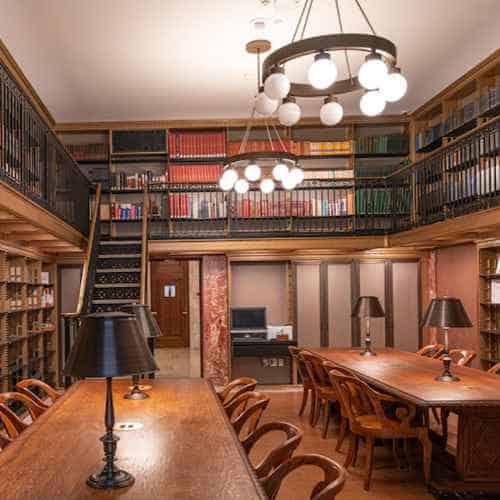
Start With the Architecture, Not the Chair Catalog
Before selecting a chair, study the room.
What period does the building represent? What materials already define the interior? Are there distinctive moldings, paneling, columns, flooring, windows, fireplaces, or other architectural elements that should influence the furniture?
Existing woodwork can be especially important. A ro
om lined with dark walnut paneling creates a very different starting point from one filled with pale oak millwork.
Proportion matters, too. A chair with a tall, elaborate back might feel perfectly at home beneath a soaring ceiling but overpower a smaller room. Likewise, an overly delicate chair can disappear visually in a monumental space.
The objective is not necessarily to make the furniture match every architectural detail. It is to understand the visual language of the building before introducing something new.
Decide Whether to Reproduce, Reference, or Contrast
There is no single correct approach to furnishing a historic interior.
In some projects, reproducing an original piece of furniture may be appropriate. If a particular chair is closely associated with an important room, preserving its appearance can help maintain the historic identity of the space.
In other projects, a historically inspired chair may be a better solution. A new chair can reference the proportions, materials, joinery details, or decorative vocabulary of a particular period without being an exact reproduction.
A third option is intentional contrast. Contemporary furniture can work beautifully in historic architecture when the relationship is deliberate. A restrained modern chair, for example, can allow elaborate historic millwork or architectural details to remain the visual focus.
The key is intentionality.
New furniture should not look as though it arrived in the room simply because it happened to fit the budget and delivery schedule.
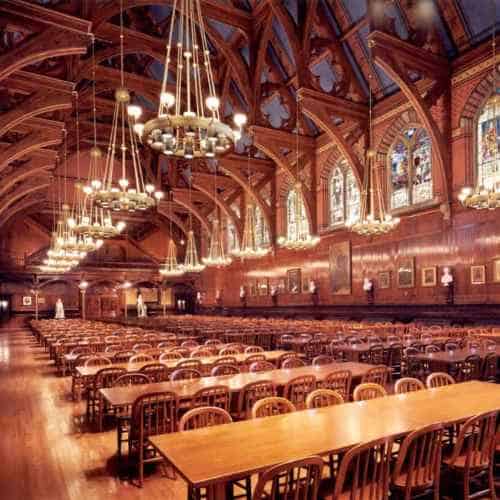
Understand the Furniture Styles Associated With the Building
Knowing a little about furniture history can make specifying chairs for historic interiors considerably easier.
Queen Anne furniture is recognized for graceful curves, cabriole legs, and relatively restrained ornamentation. Chippendale designs often incorporate more elaborate back splats, carved details, and influences ranging from Gothic to Chinese design. Federal and Georgian furniture bring their own proportions and decorative traditions, while Arts and Crafts furniture typically emphasizes visible structure, solid hardwood, and straightforward craftsmanship.
Gothic Revival architecture may call for an entirely different vocabulary, particularly in collegiate settings, libraries, churches, and other institutional buildings.
You do not necessarily need a chair from exactly the same year as the building. In fact, historic buildings themselves often contain layers of design accumulated over decades.
What matters is understanding those relationships well enough to make the new furniture feel appropriate.
Do Not Sacrifice Performance for Historical Appearance
One of the biggest mistakes in a historic renovation is assuming that a traditionally styled chair must also be constructed exactly as chairs were hundreds of years ago.
Traditional woodworking created extraordinary furniture, but chairs present a particular engineering challenge. The joints connecting the legs and seat rails absorb tremendous stress as people sit, stand, lean back, drag chairs across floors, and shift their weight.
In a heavily used institutional environment, that stress is repeated thousands upon thousands of times.
Eustis Chair developed a different approach to this problem. The proprietary Eustis Joint® reinforces critical chair joints with concealed steel rods and specialized epoxy. Instead of changing the visible character of the chair, the engineering is largely hidden within it.
That distinction is particularly valuable in historic settings.
It allows a chair to retain traditional proportions and design details while incorporating modern structural engineering. Eustis Joint® chairs are backed by a 20-year warranty against joint failure.
A historic appearance should not require accepting historically short furniture replacement cycles.
Consider How the Building Is Used Today
Historic preservation does not mean freezing a building in time.
Many historic buildings have dramatically different demands placed upon them today.
A university dining hall built when enrollment was much smaller may now accommodate hundreds of students several times a day. A library reading room may need to support laptops and other technology that its original designers could never have anticipated. A private club dining room might transition from everyday dining to weddings, lectures, meetings, and special events.
That means furniture specifications should reflect how the building functions now.
Consider how frequently chairs will be moved. Think about how long people typically remain seated. Determine whether staff need to reconfigure the room regularly. Evaluate the available storage space. Look at how the chairs interact with tables, aisles, flooring, and circulation patterns.
A chair can look perfect in a rendering and still be wrong for the building if it makes everyday operations difficult.
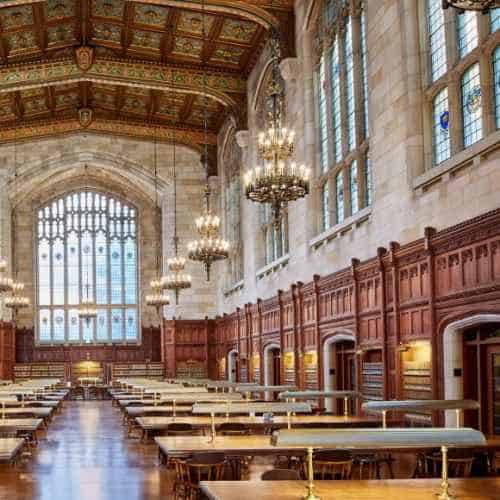
Consider Whether Stackability Could Improve the Space
Stacking chairs are sometimes associated with utilitarian event furniture rather than historic interiors. That does not have to be the case.
Hardwood stacking chairs can provide the appearance of permanent fine furniture while allowing a room to change functions when necessary.
This can be particularly valuable in historic buildings where storage is limited. Older buildings were rarely designed with large furniture storage rooms conveniently located beside dining rooms and event spaces. Eustis Chair has developed hardwood chairs that stack as many as 10 high, depending on the model. Even historically inspired designs can incorporate stackability. The Queen Anne Stack, for example, combines the traditional characteristics of Queen Anne furniture with engineering that allows the chairs to stack.
That flexibility can help a historic building adapt to modern programming without filling an important architectural space with furniture that looks temporary.
Pay Close Attention to Wood Species and Finish
Historic interiors often contain substantial amounts of wood.
Paneling, flooring, staircases, doors, built-in bookcases, tables, and architectural trim may all influence the appropriate chair specification.
The instinct may be to match everything exactly. That is not always necessary.
Wood changes over time. Sunlight, oxidation, refinishing, and normal aging can alter its appearance significantly. Even two pieces made from the same species can have different grain patterns and coloration.
Rather than relying solely on a wood species name or stain color, evaluate physical finish samples in the actual room whenever possible.
Consider the relationship among the chairs, tables, flooring, and millwork. Sometimes a close match creates the most cohesive result. In other spaces, a complementary wood tone creates greater depth and keeps the room from appearing overly uniform.
Eustis Chair manufactures seating from North American hardwoods, with custom finishing available to meet project requirements.
For a historic renovation, that flexibility can make the difference between furniture that merely occupies the room and furniture that truly belongs there.
Choose Furniture That Can Age With the Building
Historic renovation projects naturally encourage long-term thinking.
Consider the resources required to restore original windows, repair plasterwork, reproduce molding, conserve stone, refinish floors, or preserve significant architectural details. These investments are often made because the building is expected to remain useful for decades.
Furniture should be considered on a similar timeline. Solid hardwood offers an important advantage because it can age gracefully and, when appropriate, be refinished or repaired. Upholstery can also be replaced as interiors evolve. This is where durability and sustainability become closely connected.
Eustis Chair’s approach to sustainability begins with longevity. Building a chair that can remain useful for decades reduces the need to repeatedly manufacture, transport, purchase, and dispose of replacement furniture. The company manufactures its chairs in the United States from sustainably harvested North American hardwoods. For an institution investing in the preservation of an existing building, choosing furniture designed for long-term use follows the same philosophy.
Preserve what has value. Maintain it. Repair it when necessary. Keep it in service.
Look Beyond the Initial Furniture Budget
Historic renovations are rarely short-term investments. Furniture procurement should reflect that reality.
The lowest-priced chair may reduce the initial project cost, but purchase price alone does not reveal the true cost of seating.
Consider what happens if chairs begin loosening after several years. There may be repair costs, maintenance time, replacement purchases, freight, disposal, and staff time associated with continually addressing furniture problems. Then consider the disruption. Replacing several hundred chairs is not a minor task for a university, library, club, or other institution.
When evaluating furniture proposals, compare construction methods, warranties, materials, expected use, repairability, and long-term performance alongside initial price.
If the building is being renovated to serve another generation, the furniture should be selected with a similar horizon in mind.
Customization Can Solve Problems That a Catalog Cannot
Historic buildings are rarely standard. Walls may not be square. Tables may have unusual dimensions. Existing millwork may dictate specific proportions. A preservation architect may want to reference an original chair while changing its height, width, back design, or other details. That is where custom furniture becomes particularly valuable.
Eustis Chair can modify existing chair designs or develop custom seating for a particular project. That might involve changing proportions, adjusting decorative details, selecting a particular hardwood, matching an existing finish, or engineering a historically influenced design to stack. The goal should not be customization simply for the sake of making something unique. The goal is to solve the particular design and performance problems presented by the building.
Questions to Ask Before Specifying Chairs for a Historic Renovation
Does the chair complement the architecture?
Look beyond whether you simply like the chair. Consider its scale, silhouette, materials, proportions, and relationship to the room.
Does it need to reproduce an existing historic design?
If an original chair is integral to the identity of the space, determine which characteristics must be preserved and where modern construction methods may be appropriate.
Can the manufacturer customize the chair?
Historic spaces frequently present unusual requirements. The ability to adjust dimensions, details, wood species, upholstery, or finishes can be extremely valuable.
Can the finish work with existing woodwork?
Ask for physical samples and evaluate them in the space whenever possible.
Is the chair designed for the building’s actual level of use?
A chair appropriate for an occasionally used historic parlor may not be appropriate for a dining hall serving hundreds of people every day.
Does the space require flexible seating?
If chairs need to be removed regularly, investigate stack height, storage requirements, transport methods, and how the chairs protect one another when stacked.
Can the furniture be maintained for the long term?
Consider whether upholstery can be replaced, wood can be refinished, and components can be maintained rather than requiring the entire chair to be discarded.
What warranty supports the construction?
A substantial warranty can provide valuable insight into how confident a manufacturer is in its construction method.
Furniture Worthy of the Building
The best historic renovations do more than preserve old buildings. They give those buildings a viable future. Furniture should contribute to that goal.
A chair does not need to be an antique to respect historic architecture. Nor does modern performance require filling a historic room with furniture that feels disconnected from its surroundings. With careful attention to architecture, furniture history, materials, proportions, durability, flexibility, and craftsmanship, it is possible to select seating that feels appropriate on the day a renovation opens and decades later. After all, a building that has already lasted 100 years deserves furniture chosen with the future in mind.