


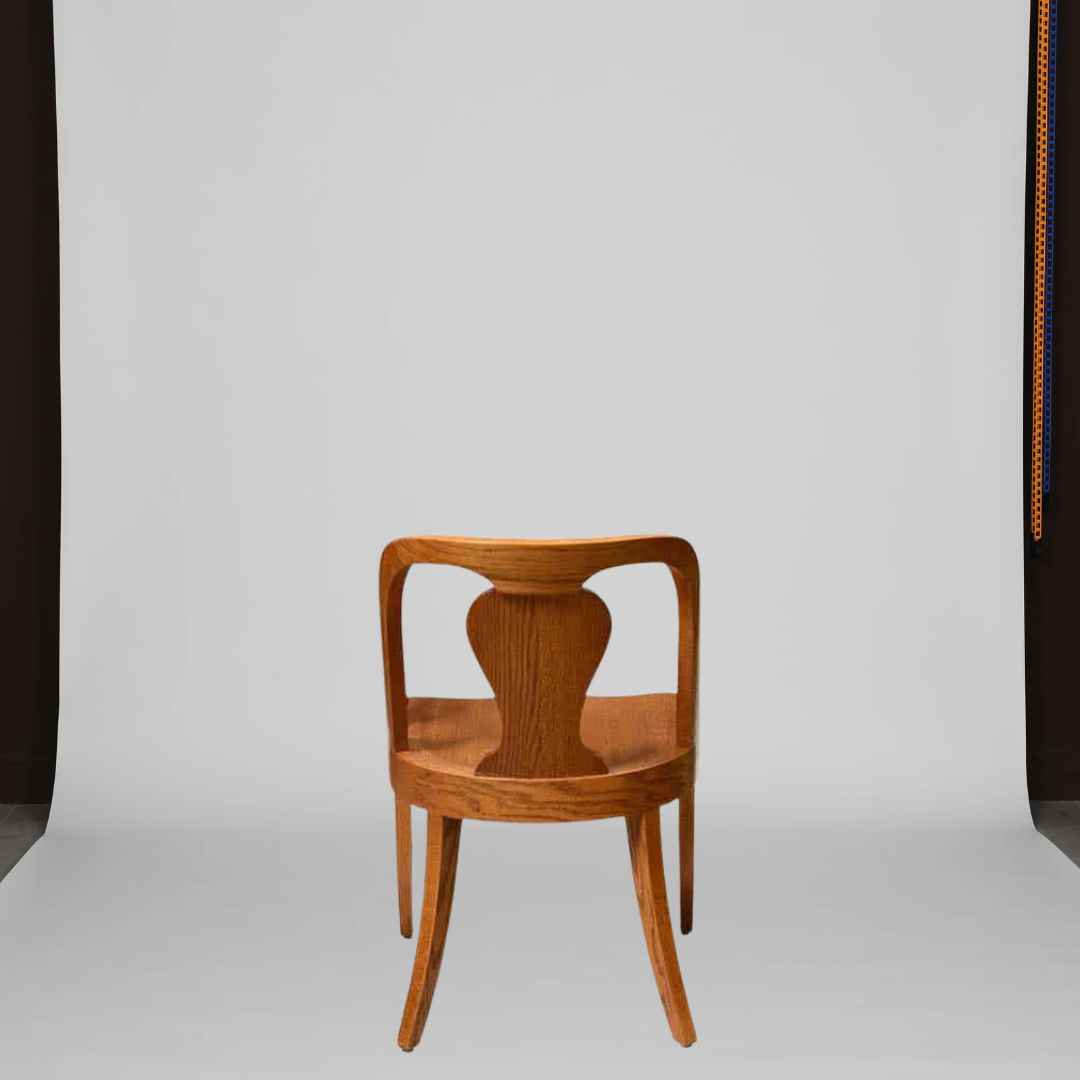
When selecting hardwood chairs, most people focus on appearance, comfort, and finish. Yet one of the most important factors in a chair’s long-term durability may be something you cannot immediately see: how its curved wooden components are made.
Curved chair backs, legs, and other structural elements can be manufactured using different woodworking techniques. Two components may look nearly identical, but their internal wood grain can tell very different stories.
Steam bending and shape cutting are two methods of producing curved hardwood components. Understanding the difference can help architects, designers, facility managers, and furniture buyers make better decisions about seating designed for decades of use.
What Is Steam Bending?
Steam bending is a traditional woodworking technique that uses heat and moisture to make solid wood temporarily flexible. The wood is placed in a steam chamber, where exposure to steam allows it to be bent into a desired shape.
Once the wood becomes pliable, skilled craftspeople carefully bend it around a form. The component is then held in position while it cools and dries, allowing it to retain its new shape.
The most important advantage of steam bending is that the wood grain follows the curve rather than being cut across it.
Wood is naturally strong along the direction of its grain. By bending a straight-grained piece of hardwood, manufacturers can preserve the continuity of the wood fibers throughout the curved component.
Furniture maker Brian Boggs, writing for Fine Woodworking, describes steam bending as a way to create curved components with continuous grain, contributing to their strength, resilience, and appearance.
This makes steam bending particularly valuable for furniture components that must combine graceful curves with structural performance.
What Is Shape Cutting?
Shape cutting, sometimes called saw cutting, is another method of producing curved wooden components. Rather than bending a straight piece of wood, the manufacturer cuts the desired curve from a larger piece of hardwood using a bandsaw or other cutting equipment.
This method can be relatively straightforward and is useful for producing shapes that would be difficult or impractical to create through bending. However, there is an important structural difference.
When a curved component is cut from a straight-grained block, the grain does not necessarily follow the finished curve. Instead, the cutting process can create areas where the wood fibers run diagonally across the component or terminate along its edges.These areas are known as short grain or cross grain.
Short grain can create weak points because the component no longer benefits from long, continuous wood fibers extending through its entire length.
According to Australian Wood Review, cutting curves from solid wood can introduce weak cross-grain areas, while bending carefully selected straight-grained wood can substantially reduce this weakness.
For furniture that experiences frequent movement, loading, and everyday wear, this distinction can be important.

Why Grain Continuity Matters for Chair Strength
To understand why steam bending can produce stronger curved components, it helps to consider how wood responds to stress.
Wood is an anisotropic material, meaning its mechanical properties vary depending on the direction of the grain. Generally, it performs much better under certain loads parallel to its fibers than under comparable loads across them. Imagine a curved hardwood chair back.
If the component is steam bent, its fibers follow the curve, maintaining a relatively continuous path from one end to the other.
If that same curve is cut from a thick, straight-grained board, portions of the finished component may contain short grain. Under certain loading conditions, those areas can become more vulnerable to splitting or fracture. The difference is especially relevant for chair components subjected to repeated stresses as people sit down, lean back, reposition chairs, or move them between rooms.
This does not mean every steam-bent component is automatically stronger than every shape-cut component. Hardwood species, grain selection, component dimensions, moisture content, manufacturing quality, and overall chair engineering all influence performance.
However, when other factors are comparable, preserving continuous grain can provide a significant structural advantage.
The Difference Becomes More Important in High-Use Seating
For a chair used occasionally in a private residence, differences in construction may not become apparent for years.
Institutional seating faces very different demands. In university dining halls, for example, chairs are pulled away from tables, repositioned, and occupied throughout the day. In libraries, students and visitors may spend hours seated while studying or working. Private clubs and restaurants need chairs that remain comfortable and attractive through countless meals and events.
Banquet and event chairs face additional demands as staff repeatedly move, arrange, and store them.
These environments place considerable stress on furniture over time. Even small weaknesses in structural components can become significant when repeated across hundreds of chairs and thousands of uses. A curved component with unfavorable grain orientation may be more susceptible to damage under certain loads. By preserving the natural direction of the wood fibers, steam bending can help reduce one potential source of structural weakness. For organizations investing in hardwood seating, understanding these manufacturing differences can help prevent costly repairs and premature replacements.
Why Eustis Chair Uses Steam Bending
At Eustis Chair, the way a chair is constructed is just as important as how it looks. That’s why we use steam bending to create curved hardwood components that combine elegant design with exceptional strength. Rather than cutting curves from larger blocks of wood and potentially introducing weak areas of short grain, steam bending allows us to preserve the natural continuity of the wood fibers.
The result is a curved component designed to withstand the demands of everyday use. This approach is especially important for the institutional environments we serve. From university dining halls and libraries to private clubs, restaurants, and event spaces, our chairs are designed for years of frequent use.
Steam bending is one of the ways we combine traditional American woodworking craftsmanship with thoughtful engineering to manufacture chairs built to last. Our commitment to durability also extends beyond individual components. Our proprietary Eustis Joint® reinforces critical chair connections and is backed by a 20-year warranty against joint failure.
Together, these construction methods reflect our belief that beautiful furniture should also deliver exceptional long-term performance.
The Long-Term Value of Stronger Hardwood Chairs
The true cost of a chair extends beyond its initial purchase price.
When structural components fail, organizations face more than the expense of replacing damaged furniture. Staff must identify and remove unsafe chairs, coordinate repairs or replacements, and manage disruptions to everyday operations. For institutions with hundreds or thousands of chairs, these costs can add up quickly.
Investing in well-engineered hardwood seating can help reduce the frequency of repairs and replacements. It also allows organizations to preserve the appearance and character of their interiors for years to come. Long-lasting furniture offers an additional advantage: sustainability.
A chair that remains structurally sound for decades makes better use of the hardwood, energy, labor, and other resources required to manufacture it. When quality hardwood chairs can be refinished or reupholstered rather than replaced, institutions can extend the useful life of their investment even further. For organizations prioritizing responsible purchasing, durable construction is an important
consideration.
The strength of a hardwood chair depends on more than its appearance
The way its components are shaped, joined, and assembled plays an essential role in determining how well it performs over time. Steam bending preserves the natural continuity of wood grain, helping create curved components that are both elegant and structurally sound.
At Eustis Chair, we believe these details matter. By combining steam-bent hardwood components, precision craftsmanship, and our proprietary Eustis Joint® technology, we manufacture American-made chairs designed to deliver lasting performance in demanding environments. Whether you’re furnishing a university, library, private club, restaurant, or other institutional space, choosing chairs built with long-term durability in mind can make a meaningful difference.